🎧
8 narrated audio chapters
Listen in the Thessaloniki Stories app — fully offline, at your own pace.
Listen in App
One of Thessaloniki’s most awe-inspiring ancient monuments, the Rotunda of Galerius stands as a testament to the city’s layered history and architectural grandeur. Built around 306 AD by the Roman emperor Galerius, the massive circular structure was originally intended to serve either as his mausoleum or a pagan temple—though it was never used as such.
With walls over 6 meters thick and a diameter of 24 meters, the Rotunda is a marvel of Roman engineering. Its massive dome, one of the oldest of its kind still standing, rises impressively above the central space and foreshadows the great domes of later Byzantine churches.
In the 4th century, the Rotunda was converted into a Christian church, becoming one of the earliest in the Byzantine Empire. It was later transformed into a mosque during the Ottoman period and finally reconsecrated as a Christian monument in the 20th century. Today, it functions as both a museum and a sacred site.
Inside, visitors can admire fragments of magnificent early Christian mosaics, shimmering with gold and depicting angelic and imperial figures, offering a rare glimpse into the art of the early Byzantine world.
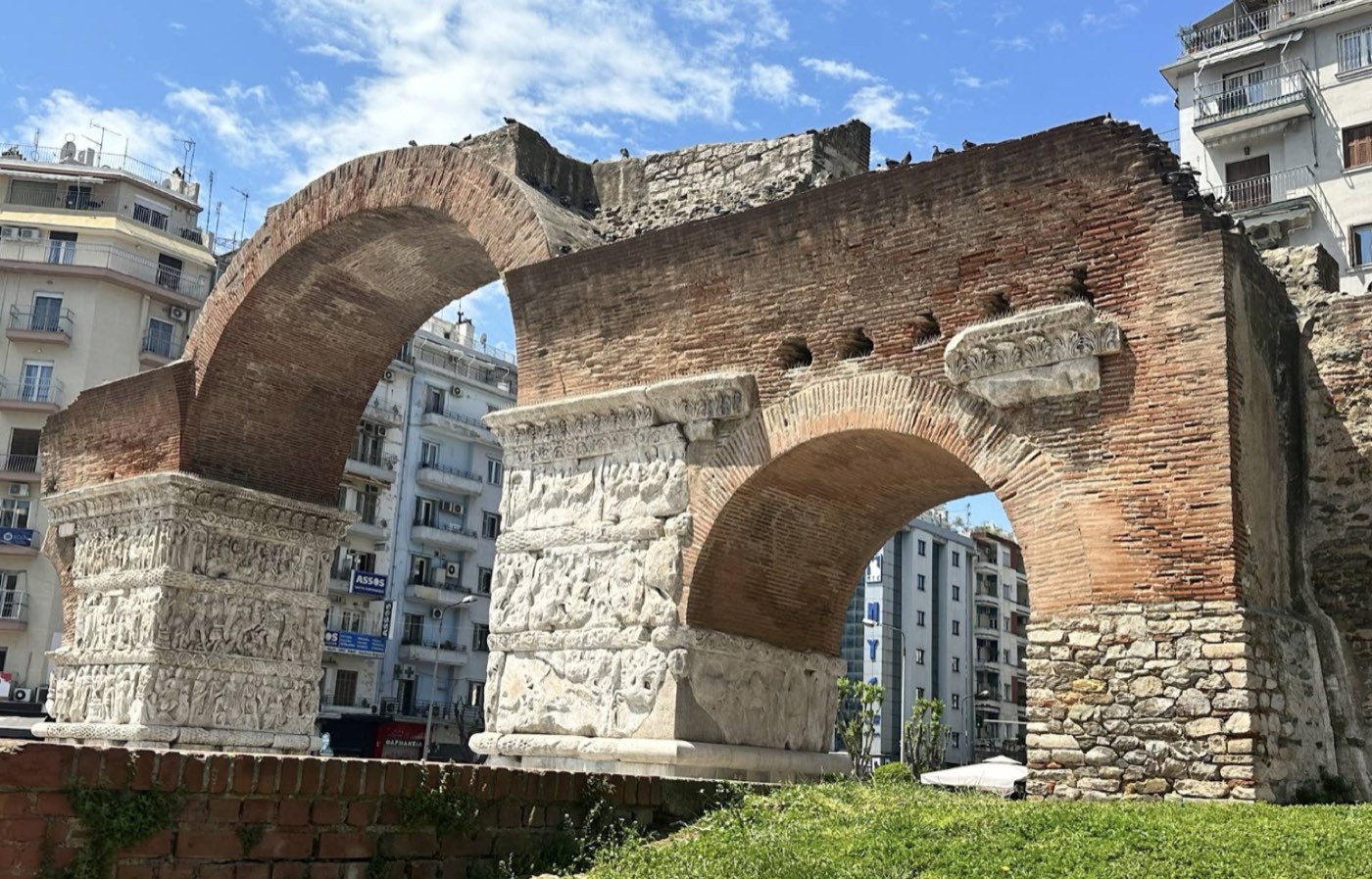
The Rotunda, together with the nearby Arch of Galerius, forms part of Thessaloniki’s UNESCO-listed early Christian and Byzantine monuments. It stands as a symbol of the city’s continuity through empires, religions, and centuries, a silent witness to its evolving identity.
Unlock the full narrated story
This is a Premium story. Download the app to unlock The Rotunda of Galerius and the rest of the city’s landmarks.
Download on the App Store